Table of Contents
Roof solar bracket profiles should be selected around the complete assembly, with the controlling interfaces agreed before an order is released. The relevant product role is to transfer photovoltaic array actions into a roof attachment system. For the buyer, the first decision is how the proposed component will meet that role in the actual equipment or installation. A nominal size or an attractive product image is useful context, but it does not resolve the fit, material and acceptance requirements.
This guide focuses on roof interface selection. The review needs to cover rail bearing surfaces, roof attachment pitch, clamp access and sealed penetrations. The practical risk is that a rail can fit its clamp while the roof fastening or waterproofing detail remains unsuitable. Addressing that mechanism early makes quotations easier to compare and gives the sample review a clear purpose.
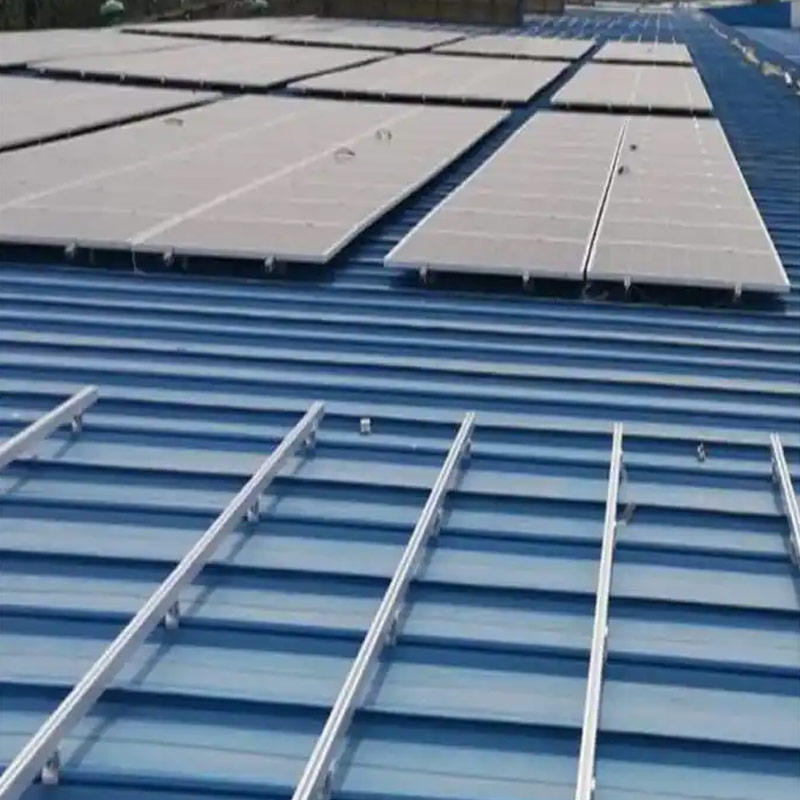
A review scenario for roof solar bracket profiles
Compare a roof with short attachment spacing against one with widely separated structural supports. Keep the module layout constant and review the changed rail span rather than copying a span from the first roof.
For roof solar bracket profiles, turn the comparison into a written decision record. List the proposed configuration and the alternative, then compare rail bearing surfaces, roof attachment pitch, clamp access and sealed penetrations under the actual application conditions. Ask which requirements are already demonstrated and which still need a drawing review, a calculation or a sample trial. This keeps the choice tied to evidence rather than to a familiar product name.
Coordinate roof attachments and water management
Roof solar bracket profiles must work with the roof system, not only with the photovoltaic rack. Identify the structural attachment location, roof build-up, sealing detail and drainage route. Review the actual roof condition and its remaining service needs with the appropriate professionals. A rail section cannot guarantee that a roof penetration is watertight or that a particular substrate can carry the array.
For roof solar bracket profiles, put the attachment and waterproofing responsibilities into the project documentation. Check tool access around flashings and fasteners in the mock-up. Avoid changing attachment spacing to suit a convenient extrusion length without design review. Preserve the roof supplier’s relevant requirements and inspect the completed interface, because a sound rack can still create maintenance problems if it blocks drainage or damages the roof finish.
Review the solar rack load path
In a solar mounting application, roof solar bracket profiles are part of a load path running from the module through clamps, rails, connections and supports to the foundation or roof. The project designer must consider the site actions and combinations required for that installation. A profile supplier’s catalogue description does not establish the capacity of every possible rack layout.
For roof solar bracket profiles, provide the module arrangement, support spacing, orientation and connection details with the inquiry. Identify whether the section is continuous or spliced. Review changes in tilt, height and roof zone as project changes. Keep the approved calculation and assembly drawing linked to the supplied parts so an installer does not extend a span or move a support based only on the apparent stiffness of the extrusion.
Compare total delivered cost and avoid hidden scope gaps
The cost of roof solar bracket profiles include more than material weight or a unit price. Tooling, machining, finishing, inspection, packing, freight and rework exposure can change the practical comparison. Ask for a quotation that describes the supplied condition and any one-time charges. Compare the same technical scope and delivery basis before deciding which offer is more economical.
For roof solar bracket profiles, examine whether a simpler feature or a different stock length reduces waste without compromising function. Discuss order quantities and repeat demand honestly so the supplier can propose an appropriate route. Do not invent savings percentages from an untested design change. Instead, compare written alternatives against the approved requirements and account for the cost of new samples, tooling and validation where those are necessary.
Match alloy and temper to the production route
The alloy and temper for roof solar bracket profiles should reflect forming, mechanical duty, machining and finish requirements. A familiar grade is not automatically the best choice for every visible or structural component. Specify the final supplied condition and the required material evidence. If a different alloy is offered to improve die behavior or availability, evaluate its implications before accepting the substitution.
For roof solar bracket profiles, connect the material choice with any later welding, bending or heat exposure. Those operations may change properties or appearance. Keep sample approval tied to the actual alloy, temper and finish route intended for production. A pleasing sample made from a different stock condition should not become the acceptance reference for a batch with unreviewed material changes.
Approve finish against a controlled sample
Surface approval for roof solar bracket profiles need more than a color name. Agree the finish process, color reference, gloss or texture where relevant, visible faces and viewing conditions. A limit sample can help define acceptable minor marks, but it should be identified and protected. Inspect actual assembled sightlines because surfaces that are hidden on one product may be prominent on another.
For roof solar bracket profiles, distinguish cosmetic acceptance from functional coating requirements. Thickness, adhesion or sealing tests must be specified separately where required, with an agreed method and acceptance basis. Keep batches traceable when neighboring components must match visually. A digital photograph is useful for communication, but lighting and display settings can conceal a mismatch, so final appearance decisions should rely on the approved physical reference or agreed measurement.
Locate secondary holes from the assembly datums
Drilled or milled features in roof solar bracket profiles should be located from the references used by the assembled product. Specify hole diameter, position, slot orientation and the required edge condition. Repeating a chain of nominal distances can accumulate error across a long member. A controlled datum scheme is more useful than tightening every dimension independently without considering how the part is located.
A drawing for roof solar bracket profiles should also show whether holes are made before or after finishing. Review tool access and support near thin walls, where drilling can distort a feature or leave hidden burrs. Use a first-article report to verify the complete pattern. If a fixture is revised, recheck the affected features rather than assuming that an unchanged CNC program guarantees an unchanged finished part.
Account for coating at corners and mating surfaces
Powder coating can change how roof solar bracket profiles fit into pockets and joins at corners. The finished dimension should be specified wherever coating buildup matters. Review recesses, edges and mounting faces with the finisher so coverage and masking requirements are clear. A bare extrusion fit trial cannot demonstrate the fit of the final coated assembly.
For roof solar bracket profiles, approve a finished assembly sample with the actual connectors or panel infill. Define visible surfaces and acceptable rack or handling marks. If an outdoor exposure requirement applies, specify the appropriate coating system and evidence rather than describing all powder coating as equally weather resistant. Keep the finish batch and sample identification in the order record so replacement parts can be reviewed against a meaningful reference.
Inspect grooves with the real mating hardware
A groove in roof solar bracket profiles performs a specific job, such as retaining a gasket, panel, spline, fastener or connector. Width alone does not describe that job. Depth, lip shape, entry clearance and the surrounding wall all influence engagement. Identify the mating component and its tolerance on the drawing so the extrusion supplier can review the complete fit.
For roof solar bracket profiles, combine dimensional inspection with an agreed functional trial using production-representative hardware. A hand-selected fastener that happens to fit is weak evidence for a batch. Include finish allowance and the range of mating sizes. Where the joint transfers load, a fit check establishes assembly compatibility only; any required load or slip validation should follow the approved design and test plan.
Evidence to compare for roof solar bracket profiles
| Decision | Incomplete basis | Evidence to request |
|---|---|---|
| Assembly interface | A nominal size or photograph | rail bearing surfaces, roof attachment pitch, clamp access and sealed penetrations |
| Material and finish | A generic material name | Specified alloy or grade, condition and finish route |
| Sample release | Appearance alone | roof survey, structural attachment drawing, load combinations and roof-system sealing detail |
| Commercial comparison | Unit price without exclusions | Included processing, documents, packing and delivery basis |
The comparison is intended to guide a review of roof solar bracket profiles, not to supply a universal design value. Choose the acceptance basis from the actual project and keep it consistent across quotation, sample approval and receiving inspection. If the complete assembly needs performance validation, define that work separately from the supplier’s component measurements.
Request a review of roof solar bracket profiles
Beihaoli lists Roof Solar Bracket Profiles in its catalogue. Use that page to explain the product family, then send the current drawing and application requirements for a configuration-specific review. For roof solar bracket profiles, highlight rail bearing surfaces, roof attachment pitch, clamp access and sealed penetrations and include the evidence required for acceptance. Catalogue descriptions and photographs should not be treated as an order-specific capacity or certification statement.
The company’s manufacturing capabilities page describes forging, extrusion, machining, finishing and inspection support. Ask which operations and documents are included in the proposed roof solar bracket profiles supply route. Provide the required quantity, sample expectations and delivery destination so the response can address tooling, first-article work, packing and shipment planning on the same technical basis.
For independent background, consult the U.S. Department of Energy photovoltaic system design overview. Use this overview for system context. Project-specific structural, module and electrical requirements still need their own evidence.
Questions about roof solar bracket profiles
What information is needed to specify roof solar bracket profiles?
Provide the application, current drawing, material and supplied condition, dimensions, finish and quantity. For this interface, identify rail bearing surfaces, roof attachment pitch, clamp access and sealed penetrations. Include the mating parts so fit is reviewed as an assembly.
Can roof solar bracket profiles be selected by appearance alone?
No. A photograph helps explain the shape but cannot establish tolerances, material, service limits or system qualification. In this application, a rail can fit its clamp while the roof fastening or waterproofing detail remains unsuitable. Request the relevant drawing and evidence.
Which evidence should accompany roof solar bracket profiles?
Agree an inspection package before ordering. Relevant inputs include roof survey, structural attachment drawing, load combinations and roof-system sealing detail. Material records and assembly trials answer different questions, so neither should be used as a substitute for the other.
When should buyers request a sample of roof solar bracket profiles?
Request a sample before batch release when a new interface, finish, tool or material is involved. Define the checks in advance and retain the accepted sample identity and drawing revision.
What should a quotation for roof solar bracket profiles include?
Ask for the supplied condition, included processing and inspection, packaging, quantity basis and order-specific delivery plan. Have deviations and exclusions listed explicitly so competing offers can be compared on the same scope.