Baihaoli shares how technical review, process planning and export packaging support custom forged and machined aluminum parts.
Custom aluminum parts often begin with a drawing, a sample or a problem that a buyer needs to solve. The final component may be a forged flange, a special equipment connector, an industrial profile, a machined bracket or a non-standard assembly part. What all of these projects have in common is the need for a practical path from design intent to stable delivery. Binzhou Beihaoli New Materials Co., Ltd. supports this path through aluminum alloy selection, forging, extrusion, CNC machining, inspection and export packing.
The first step is technical review. A drawing may show dimensions, tolerances and material requirements, but it does not always explain how the part will be used. Understanding the application helps the manufacturing team check whether the selected alloy, wall thickness, machining allowance and surface treatment are appropriate. For example, a part used outdoors may need stronger corrosion resistance, while a component used in equipment assembly may require tighter machining tolerance and repeatable hole positions.
Material selection is a practical engineering decision. Aluminum alloys such as 6061-T6, 6063-T5, 5052 and 5083 are used for different reasons. Some are preferred for strength and machining, others for forming behavior, corrosion resistance or profile extrusion. When buyers provide the working environment, expected load, finish and assembly method, Baihaoli can review whether the requested material is suitable or whether another option should be considered.
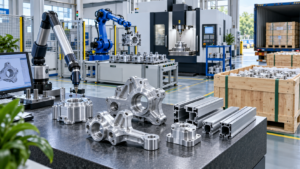
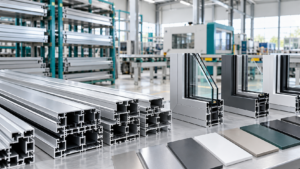
Process planning connects the design to the production route. A custom part may require forging first, followed by heat treatment and CNC machining. Another part may begin as an extruded profile and then move through cutting, drilling, milling, tapping and surface finishing. Planning the sequence matters because each operation affects dimensional control, surface quality and production cost. A well-planned process can reduce waste and improve batch consistency.
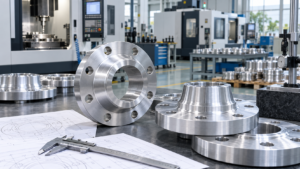
CNC machining is often where custom aluminum projects succeed or fail. Precision turning, milling and drilling must produce parts that match the drawing while remaining efficient enough for batch production. Fixturing, tool selection, machining allowance and inspection frequency all influence the result. Baihaoli's integrated workflow helps manage these points by connecting production, machining and quality checks within the same project plan.
Inspection should not wait until the end. During production, key dimensions can be checked at defined stages so that problems are found early. For machined flanges, this may include inner diameter, outer diameter, bolt-hole position and sealing face. For custom forged components, inspection may focus on critical mounting surfaces, hole patterns and tolerance zones. For profiles, section size, length, surface finish and straightness may be important. Clear inspection priorities help both supplier and buyer align expectations.
Export packaging is another part of the delivery plan. Precision aluminum parts need protection against scratches, impact and moisture during transport. Profiles require careful bundling and support so they do not bend or rub against each other. Machined surfaces may need separators, wrapping or stronger crates. When the packing method is planned together with the part design and delivery destination, the goods are more likely to arrive ready for use.
Communication also plays a large role in custom work. Buyers can improve quotation accuracy by sending drawings, samples, alloy grades, surface finish requests, quantity, tolerance notes, destination and expected schedule. If the project is still early, it is helpful to explain the application and any performance concerns. This allows Baihaoli to identify possible manufacturing risks before production begins.
Custom aluminum machining is not only about cutting metal. It is a coordinated workflow that includes material understanding, process planning, production control, inspection and logistics. For global buyers who need reliable aluminum alloy parts, the strongest results come from early technical communication and a supplier capable of managing multiple production steps. Baihaoli continues to build its service around that requirement, helping customers move from drawing review to finished parts and export-ready delivery.
Prototype confirmation can also reduce risk for custom work. When a part has complex geometry, tight tolerances or uncertain assembly conditions, a sample or small trial batch allows both sides to review the design before larger production begins. The buyer can check fit, surface quality and functional details, while the supplier can confirm machining stability, fixture design and inspection method. This step is especially useful when a drawing has been converted from an old sample or when the part will be used in new equipment.
Cost control should be discussed together with technical performance. Sometimes a small design adjustment can reduce machining time, improve material utilization or make inspection easier without changing the function of the part. Early communication gives Baihaoli the opportunity to suggest practical manufacturing improvements. For buyers, this can lead to a more stable supply plan, fewer production interruptions and a clearer understanding of how each requirement affects price, lead time and repeatability.