Purchase & Selection Guide
Your Complete Guide to Choosing the Right Materials
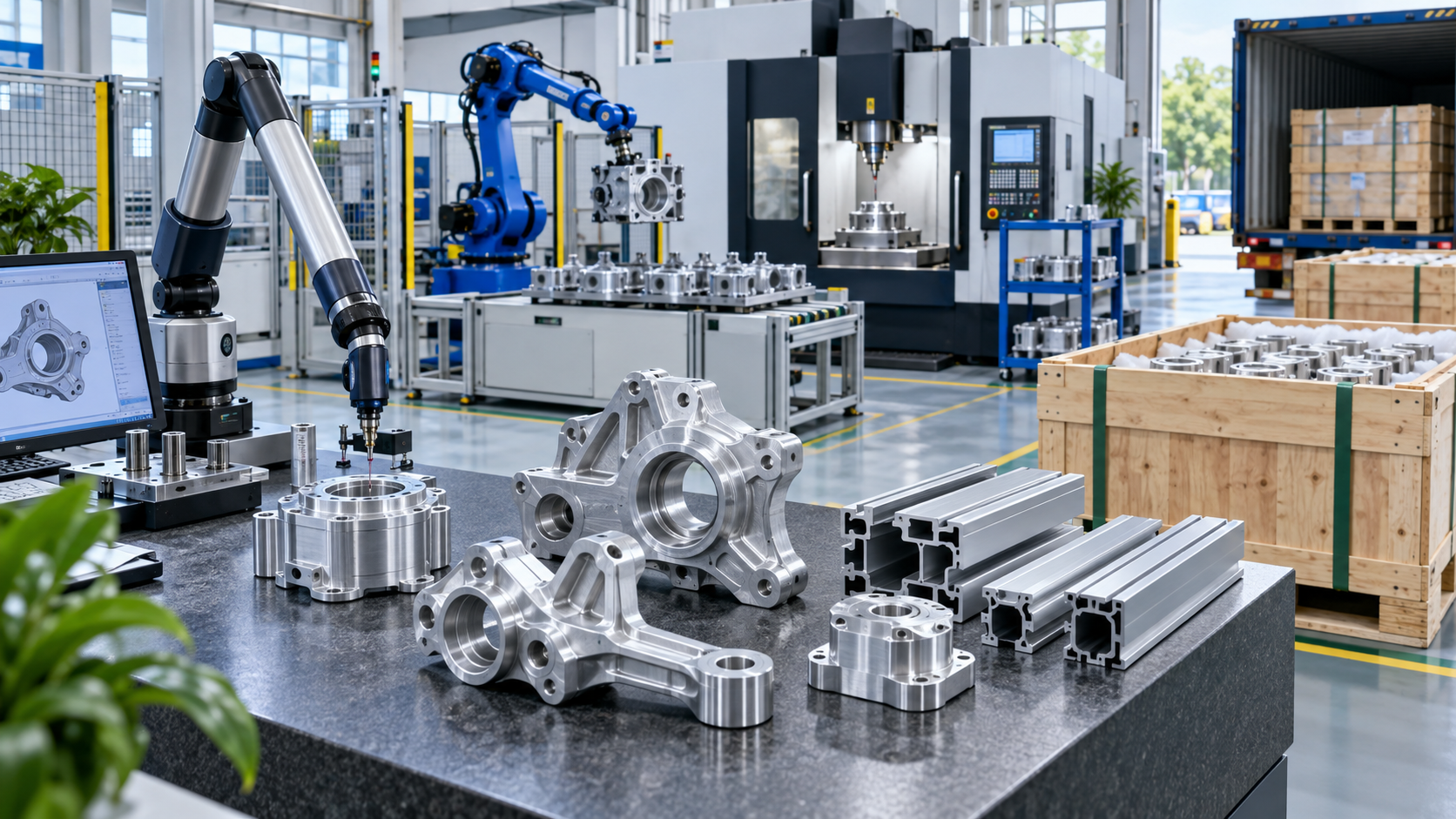
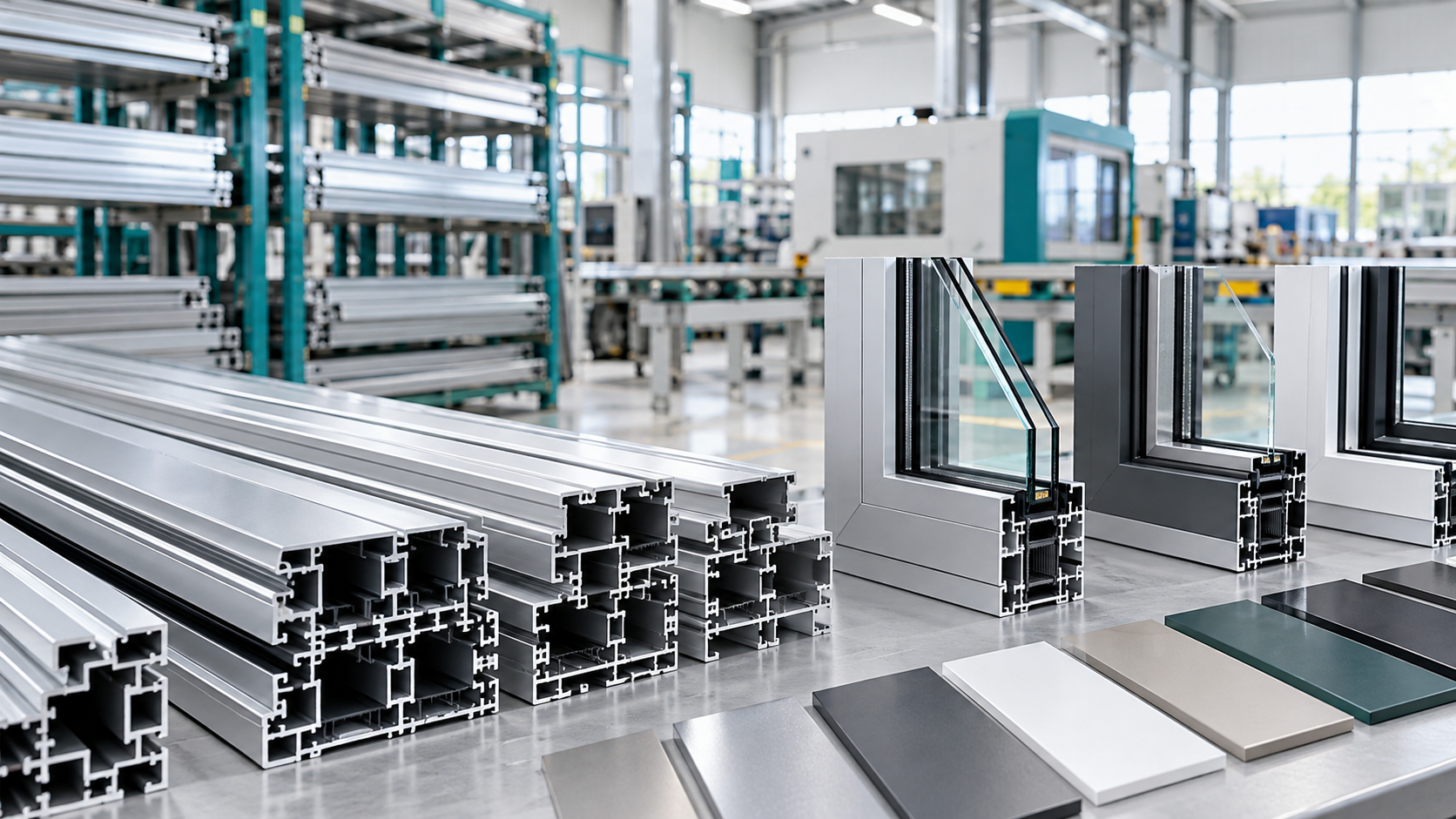
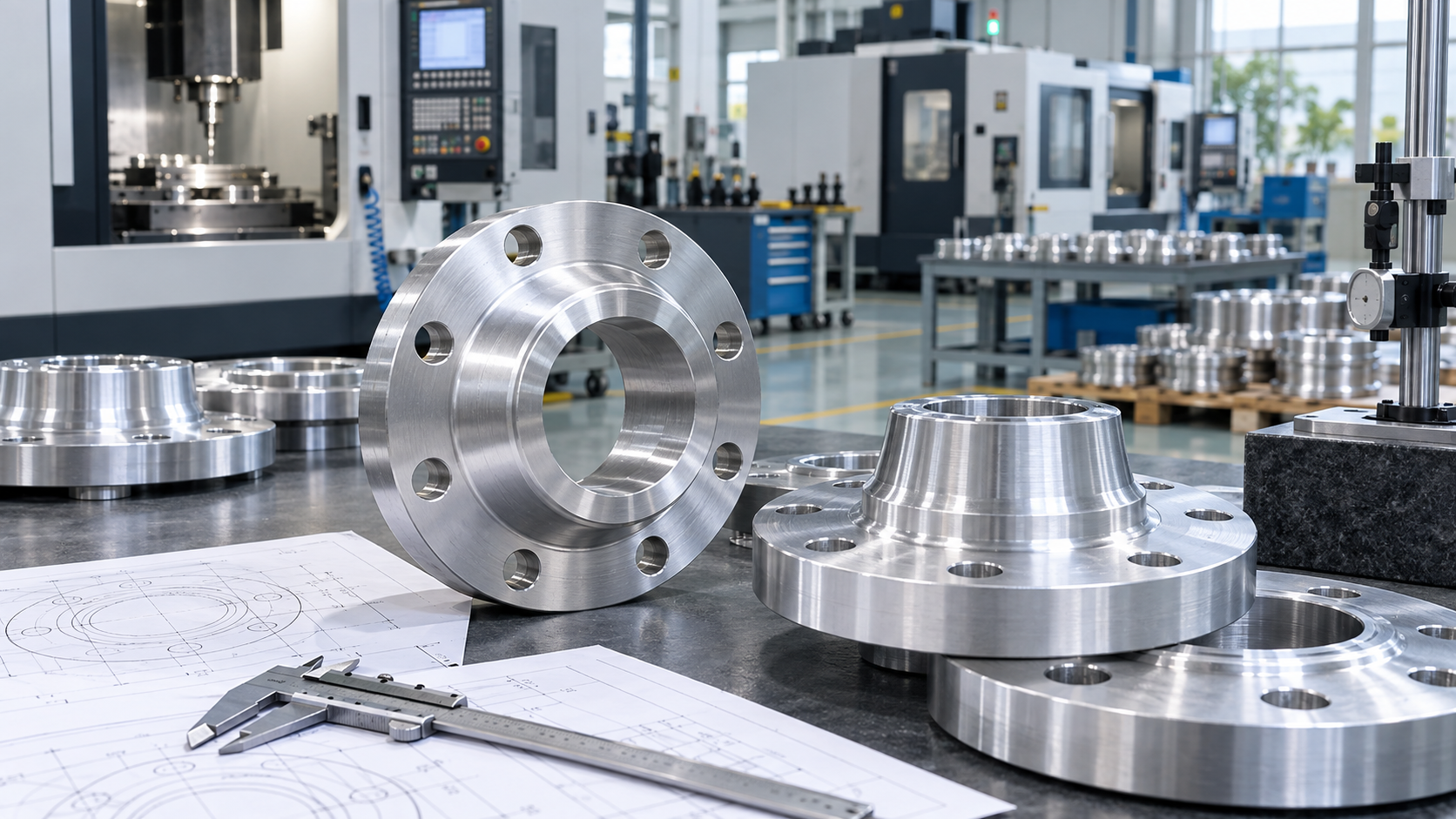
Whether you need aluminum alloy profiles for architectural or industrial use, carbon steel flanges for pipeline systems, or lightweight aluminum flanges for corrosive environments, our comprehensive product range meets international standards. Our expert team provides professional guidance to help you select the optimal material and finish for every project requirement.
| Inspection Item | Technical Specification | English Specification |
|---|---|---|
| Tensile Strength Rm | ≥160 MPa | Tensile strength ≥160 MPa |
| 0.2% Proof Strength Rp0.2 | ≥110 MPa | 0.2% Proof strength ≥110 MPa |
| Elongation after Fracture A | ≥8 % | Elongation after fracture ≥ 8% |
| Webster Hardness HW | ≥8 | Webster hardness ≥8 HW |
Dimensional and Geometric Tolerances :
1. Wall Thickness
Minimum nominal wall thickness: ≥1.4mm for residential door/window profiles; ≥2.0mm for curtain wall/heavy-duty door & window profiles; tolerance: ±0.15mm.
2. Straightness: ≤0.3mm per 300mm length; ≤1.8mm total deviation over a full 6m length.
3. Twist: ≤0.5mm per 300mm length.
4. Fixed Length: Standard 6000mm; tolerance +15mm/-5mm.
Surface Treatment Technical Specifications:
1. Anodized Finish
• Average oxide film thickness ≥10μm (AA10 grade); local thickness ≥8μm.
• Qualified sealing quality; neutral salt spray test ≥1000h (no corrosion).
2. Powder Coating
• Coating thickness: 40–120μm.
• Pencil hardness ≥H; adhesion Grade 1; weather-resistant and UV-resistant.
3. PVDF Coating (High-end curtain walls)
• Film thickness: ≥30μm (2-coat system), ≥40μm (3-coat system); artificial weathering resistance: 2000h.
• Complies with AAMA 2605 standard; preferred choice for coastal, highly corrosive environments.
4. Wood Grain Transfer (Wood-effect finish) Grain Transfer
Compliant paint film adhesion; uniform texture; weather-resistant and color-fast.
Specific Specifications for Thermal Break Profiles:
1. Thermal break strip material: PA66 GF25 (25% glass fiber reinforced polyamide); PVC strips are prohibited.
2. Composite shear strength meets GB/T5237.6 standards; no detachment or cracking under high or low-temperature conditions.
3. Effectively breaks thermal bridges, reduces profile heat transfer coefficient, and improves the thermal insulation performance of doors and windows.
Appearance Quality Requirements:
Profile surfaces must be free of cracks, blisters, peeling, or corrosion spots; surface finish must have uniform color and be free of obvious scratches or dents.
Basic Specifications:
Product Name: Industrial Aluminum Alloy Profiles
Common Alloy Grades: 6063-T5, 6063-T6, 6061-T6 (for heavy-duty industrial applications)
Standards: GB/T 5237-2017, GB/T 6892-2016 (National Standards for Industrial Aluminum Profiles)
Applications: Automation equipment frames, assembly line racks, workbenches, protective enclosures, warehouse shelving, industrial fencing, photovoltaic mounting systems
Export Standards: Compatible with Australian AS standards and EU acceptance specifications for industrial aluminum profiles; original material test reports available
Core Material Chemical Composition:
6063 Alloy (General-purpose light industrial): Mg: 0.45%–0.9%, Si: 0.20%–0.60%, Fe ≤ 0.35%, Cu ≤ 0.10%, Al: Balance
6061 Alloy (Heavy-duty industrial): Mg: 0.8%–1.2%, Si: 0.40%–0.80%, Fe ≤ 0.70%, Cu: 0.15%–0.40%, Al: Balance
Inspection Item | 6063-T5 Parameters | 6063-T6 Parameters | 6061-T6 Parameters | English Specification |
|---|---|---|---|---|
Tensile Strength Rm | ≥160MPa | ≥205MPa | ≥310MPa | Tensile Strength |
Yield Strength Rp0.2 | ≥110MPa | ≥180MPa | ≥276MPa | 0.2% Proof Strength |
Elongation After Fracture A | ≥8% | ≥10% | ≥15% | Elongation After Fracture |
Webster Hardness HW | ≥8HW | ≥12HW | ≥15HW | Webster Hardness |
Density | 2.7g/cm³ | 2.7g/cm³ | 2.7g/cm³ | Density |
Dimensions and Precision Parameters:
1. Standard cross-section specifications: 2020, 3030, 4040, 4545, 5050, 6060, 8080 (standard industrial profiles); custom cross-sections available upon request.
2. Wall thickness parameters: Standard thicknesses of 1.8mm, 2.0mm, 2.5mm, 3.0mm, and 4.0mm; heavy-duty profiles available with customized wall thicknesses of 4.0mm–8.0mm.
3. Fixed length: Standard 6000mm per piece (tolerance +15mm/-5mm); custom cutting to specific lengths available.
4. Geometric tolerances: Straightness ≤0.3mm/300mm; total length curvature ≤1.8mm; twist ≤0.5mm/300mm (high-precision industrial standard).
Surface Treatment Processes and Parameters:
1. Natural Anodized
• Anodic film thickness: 8–12μm (meets AA10 industrial grade standard).
• Performance: Wear-resistant, corrosion-resistant, and oxidation-resistant; suitable for standard indoor industrial equipment; salt spray test ≥800h without corrosion.
2. Sandblasted Anodized
• Fine, uniform sandblasted surface finish; film thickness 10–15μm.
• Matte texture and scratch resistance; suitable for high-end automation equipment and inspection instrument frames.
3. Powder Coating
• Coating thickness: 40–120μm; pencil hardness ≥H; adhesion grade 1.
• Excellent weather resistance, dust-proof, and easy to clean; suitable for outdoor industrial supports and factory fencing/enclosures.
4. Polished (Bright Finish) Finish
Mirror-like, burr-free surface with high flatness; suitable for precision equipment and decorative industrial structural components.
Key Physical Properties:
1. Thermal Conductivity: 203 W/(m·K); excellent heat dissipation performance, suitable for industrial equipment requiring heat management.
2. Modulus of Elasticity: 69 GPa; good toughness, resistant to deformation, and offers strong load-bearing stability.
3. Corrosion Resistance: Anodized finish provides resistance to acids, alkalis, and oxidation; suitable for complex indoor and outdoor industrial environments.
4.Machinability: Can be cut, drilled, tapped, bent, and welded; easy to assemble with no complex post-processing required.
Basic Information:
Product Name: Carbon Steel Flange
Common Materials: Q235B, 20#, A105, 16Mn (Q345B)
Applicable Media: Water, steam, oil, gas, and industrial fluids (atmospheric/low-to-medium pressure)
Applications: Piping projects, chemical industry, power generation, HVAC, fire protection, petroleum equipment, and export piping systems
Major Standards:
Chinese Standards (GB): GB/T 9113, GB/T 9115, GB/T 9116, GB/T 9117, GB/T 9118
US Standards: ANSI B16.5, ASME B16.5 (Common for export)
German Standards: DIN 2501 (European market)
Carbon Steel Flange Classification (Structural Types):
1. Plate Flat Weld Flange (PL): Most common, cost-effective; suitable for low-to-medium pressure pipelines at ambient temperature
2. Weld Neck Flange (WN): High strength; resistant to high pressure and high temperature; suitable for high-pressure, high-temperature, and high-vibration conditions
3. Slip-On Flange (SO): Easy to install; medium pressure rating; highly versatile
4. Blind Flange (BL): Pipeline sealing, pressure testing of pipe ends, and sealing of equipment ports
5. Threaded Flange (TH): No welding required; suitable for thin-walled pipes and explosion-proof scenarios requiring frequent assembly/disassembly
6.Lap Joint Flange with Weld Neck Stub End (PJ/SE): For corrosion-resistant piping systems; suitable for acidic or alkaline conditions
Pressure Class Parameters Rating:
1. National Standard (GB) Pressure Ratings (PN)
PN6, PN10, PN16, PN25, PN40, PN63, PN100 (Unit: bar)
Common ratings for civil/industrial applications: PN10, PN16, PN25
2. American Standard Pressure Ratings (Class; primary standard for exports)
Class 150, Class 300, Class 600, Class 900, Class 1500
Material Grade | Main Chemical Composition | Tensile Strength | Yield Strength | Elongation | Applicable Conditions |
|---|---|---|---|---|---|
Q235B | C≤0.22%, Si≤0.35%, Mn≤1.4%, S/P≤0.04% | 370 ~ 500MPa | ≥235MPa | ≥26% | Normal pressure, normal temperature, general water heating & fire protection |
20# Carbon Steel | C: 0.17% ~ 0.24%, Mn: 0.35% ~ 0.65% | ≥410MPa | ≥245MPa | ≥25% | Medium/low pressure pipelines, conventional industrial equipment |
A105 (ASTM) | C≤0.35%, Mn: 0.6% ~ 1.05%, Main material for export | 485 ~ 655MPa | ≥250MPa | ≥30% | Foreign trade ANSI standard, high temp & high pressure conditions |
16Mn/Q345B | Low alloy high strength, Mn content 1.0% ~ 1.6% | 470 ~ 630MPa | ≥345MPa | ≥21% | High pressure, thick wall, heavy load pipeline engineering |
Common Size Specifications:
1. Nominal Diameter (DN) Range
DN15, DN20, DN25, DN32, DN40, DN50, DN65, DN80, DN100, DN125, DN150, DN200, DN250, DN300–DN2000 (Customization available for non-standard large diameters)
2. Key Dimension Definitions
• Outer Diameter (D): Maximum overall outer diameter of the flange
• Bolt Circle Diameter (K): Diameter of the circle on which bolt hole centers are located
• Bolt Hole Diameter (b): Standard sizes include 14/18/22/26 mm
• Flange Thickness (T): Increases with pressure rating; standard thickness for PN16 is 18–24 mm
3. Sealing Surface Diameter (d): Critical dimension for the pressure-bearing seal
4. Bolt Quantity (n): Standard configurations include 4, 8, 12, 16, or 20 holes
Sealing Face Types:
1. Raised Face (RF): Most common type; suitable for the vast majority of atmospheric, low, and medium-pressure applications; standard for export
2.Male & Female Face (FM/M): Offers higher sealing precision and prevents gasket displacement; suitable for liquid and oil pipelines
3.Tongue & Groove (MFM): Specialized for high-pressure sealing and gas pipelines; offers excellent sealing performance
4.Flat Face (FF): Specialized for mating with flat equipment surfaces and for fire protection pipelines
Technical Parameters (Machining & Appearance) Standards:
• Machining Precision: Sealing surfaces are free of blowholes, sand holes, and cracks; flatness error ≤ 0.1 mm.
• Forging Process: Integral forging; free of laminations and shrinkage cavities; uniform microstructure; stable pressure-bearing performance.
• Surface Treatment: Black oxide (anti-rust), sandblasting, anti-rust painting, or galvanizing (optional).
• Bolt Hole Precision: Hole diameter tolerance ±0.5 mm; holes are evenly spaced and symmetrical; no misalignment or offset.
• Welding Bevel: Uniform bevels on weld-neck flanges suitable for butt-welding to pipes; free of burrs or flash.
Pressure and Temperature Parameters (Working Conditions):
• Standard Operating Temperature: -20°C to 425°C.
• Low-Temperature Suitability: Q235B/20# grades are suitable for ambient and low-temperature conditions; A105 is suitable for conditions involving alternating high and low temperatures.
• Pressure Resistance: 100% hydrostatic and pneumatic testing of finished products; no leakage or deformation.
• Corrosion Resistance: Standard anti-rust treatment for carbon steel substrates; anti-corrosion painting or hot-dip galvanizing available to enhance weather resistance.
Basic Information:
Product Name: Aluminum Alloy Flange
Common Materials: 5052, 6061-T6, 6063-T5, 5083 (specialized for heavy-duty, anti-corrosion applications)
Key Characteristics: Lightweight, high strength, rust-proof, resistant to acid/alkali corrosion and oxidation, easy to machine, good thermal conductivity
Applicable Media: Seawater, acidic/alkaline chemical fluids, purified water, gases, eco-friendly low-temperature media, corrosive industrial fluids
Typical Applications: Seawater desalination equipment, marine/shipboard equipment, anti-corrosive chemical piping, new energy equipment, outdoor environmental projects, export-oriented anti-corrosion systems (e.g., for Australia), lightweight piping systems
Major Standards:
Chinese Standards (GB): GB/T 9113, GB/T 9115, GB/T 9116 (compatible with general piping standards)
US Standards: ASME B16.5, ANSI B16.5 (primary standards for export)
General Industrial Standards: GB/T 3190, GB/T 6892 (national standards for aluminum alloy materials)
Aluminum Alloy Flange Classification (Structural Types):
1. Plate Flat Weld Aluminum Flange (PL): General-purpose, cost-effective; lightweight design suitable for standard anti-corrosion piping and low-pressure, ambient-temperature chemical equipment
2. Weld Neck Aluminum Flange (WN): High structural strength, impact resistance, and temperature resistance; suitable for anti-corrosion piping operating under medium-to-high pressure or vibration conditions
3. Slip-On Aluminum Flange (SO): Easy installation, precise alignment, and high versatility; the preferred choice for outdoor lightweight equipment
4. Blind Aluminum Flange (BL): Used for pipe capping, equipment port sealing, and pressure testing; corrosion- and rust-resistant, requiring no maintenance
5.Threaded Aluminum Flange (TH): No welding required; suitable for thin-walled aluminum pipes, explosion-proof applications, and lightweight piping systems requiring frequent assembly/disassembly
6.Lap Joint Aluminum Flange PJ/SE: Designed for use with corrosion-resistant pipe bodies; suitable for severe operating conditions involving strong acids/alkalis and seawater corrosion.
Pressure Class Ratings:
1. National Standard (GB) Pressure Ratings (PN)
PN6, PN10, PN16, PN25, PN40 (Unit: bar)
Commonly used aluminum alloy flanges: PN10, PN16 (Mainstream choices for lightweight, corrosion-resistant applications)
2. ANSI/ASME Pressure Ratings (Class; primary standard for export)
Class 150, Class 300 (Aluminum flanges are suitable for low- and medium-pressure corrosion-resistant applications; high-pressure ratings are rarely used)
Material Grade | Core Composition Features | Tensile Strength | Yield Strength | Elongation | Applicable Conditions |
|---|---|---|---|---|---|
6063-T5 | Aluminum-magnesium-silicon alloy, lightweight, easy to process, excellent oxidation resistance | ≥160MPa | ≥110MPa | ≥8% | Normal pressure light equipment, general anti-corrosion, general outdoor conditions |
6061-T6 (Main Force) | High-strength aluminum-magnesium-silicon alloy, good toughness, deformation resistant, excellent welding performance | ≥310MPa | ≥276MPa | ≥15% | Medium pressure anti-corrosion, foreign trade standards, chemical industry, new energy mainstream material |
5052 | High-magnesium aluminum alloy, acid-alkali resistant, seawater corrosion resistant, excellent plasticity | ≥190MPa | ≥90MPa | ≥18% | Water purification equipment, mild chemical corrosion, outdoor humid environments |
5083 (Heavy-duty Anti-corrosion) | Ultra-high magnesium alloy, marine grade anti-corrosion, resistant to severe acid-alkali, excellent low-temperature performance | ≥305MPa | ≥215MPa | ≥22% | Marine shipping, seawater desalination, severe chemical corrosion, low temperature and high pressure conditions |
Standard Size Specifications:
1. Nominal Diameter (DN) Range
DN15, DN20, DN25, DN32, DN40, DN50, DN65, DN80, DN100, DN125, DN150, DN200, DN250, DN300–DN1200 (Customization available for non-standard large diameters and special shapes)
2. Key Dimensions
3. Outer Diameter (D): Maximum outer circular dimension of the flange; complies with GB (Chinese) or ANSI (US) standards
4.Bolt Circle Diameter (K): Reference dimension for bolt hole positioning; compatible with standard piping accessories
5.Bolt Hole Diameter (b): Standard sizes include 14/18/22mm; designed for lightweight compatibility with standard bolts
6.Flange Thickness (T): Slightly thinner than carbon steel flanges of the same specification (e.g., 16–22mm for PN16); weight reduction without compromising pressure rating
7.Sealing Surface Diameter (d): Precision sealing reference; compatible with various rubber and PTFE gaskets
8.Bolt Quantity (n): Standard configurations of 4, 8, 12, or 16 holes; symmetrically and evenly spaced
Sealing Face Types:
1.Raised Face (RF): Standard for export; most cost-effective; suitable for most anti-corrosion, atmospheric, and medium-pressure piping applications
2..Male & Female Face (FM/M): Prevents gasket displacement and ensures a tight seal; suitable for pipelines carrying chemical liquids or acidic/alkaline media
3.Tongue & Groove (MFM): Specialized for high-pressure gas tightness; eliminates gas leakage; suitable for anti-corrosion gas pipelines
4.Flat Face (FF): For flat-to-flat equipment connections; specialized for lightweight fire protection and environmental protection equipment
Surface Treatment Processes and Technical Parameters:
1.Precision Machined (Natural Finish): Smooth surface free of burrs and oxide scale; retains the aluminum alloy’s inherent corrosion resistance; suitable for dry indoor environments
2.Anodizing Treatment • Anodized: Anodic oxide film thickness of 8–15 μm; offers increased hardness, scratch resistance, and doubled weather resistance; the preferred choice for outdoor and overseas projects.
3.Sandblasted Matte Finish: Fine, uniform surface texture with a matte, anti-rust finish; aesthetically pleasing and aging-resistant; suitable for high-end, lightweight equipment.
4.Anti-corrosion Coating: Acid- and alkali-resistant coating; suitable for harsh chemical environments; extends service life.
Machining Precision & Technical Standards:
1.Machining Precision: Precision CNC turning; sealing surfaces are flat and smooth, free from sand holes, air pockets, or cracks; flatness error ≤0.1 mm.
2.Forming Process: Forging or precision sheet metal machining; dense internal microstructure, free from laminations or deformation; high pressure-bearing stability.
3.Bolt Hole Precision: Hole diameter tolerance ±0.5 mm; symmetrical hole spacing; no misalignment or offset; ensures excellent installation compatibility.
4.Weld Bevel: Uniform and smooth bevels on weld-neck flanges; suitable for aluminum pipe welding; produces aesthetically pleasing welds with excellent airtightness.
Pressure/Temperature Resistance & Operating Conditions:
1.Standard Operating Temperature: -40°C to 200°C; excellent low-temperature performance with no cold-brittleness (superior to carbon steel flanges).
2.Low-Temperature Resistance: 5083 and 6061 alloys suitable for extreme cold; strength and toughness remain undiminished at low temperatures.
3.Pressure Resistance: 100% hydrostatic and pneumatic testing of finished products; no leakage or deformation; meets rated pressure requirements.
4.Key Anti-corrosion Advantages: Naturally oxidation-resistant and rust-proof; withstands corrosion from seawater, weak acids, and weak alkalis; requires minimal anti-corrosion maintenance; ideal for Australian coastal and humid outdoor environments.
5.Density Characteristics: Density of 2.7 g/cm³; weight is only one-third that of carbon steel flanges; significantly reduces equipment load and installation costs.

Latest Insights
Human Hair Extension Knowledge & Industry Updates
Custom Aluminum Machining Helps Buyers Move From Drawing to Delivery
Baihaoli shares how technical review, process planning and export packaging support custom forged and machined aluminum parts.
Architectural Aluminum Profiles Improve Energy Efficient Building Systems
From thermal break window systems to surface finishes, Baihaoli reviews the practical details behind modern architectural aluminum profile projects.
How Forged Aluminum Flanges Support Reliable Power Equipment Projects
Baihaoli explains how alloy selection, forging control and precision machining help aluminum flanges perform in demanding equipment environments.
Payment questions
Get Clear Answers About Your Payment
Can you produce aluminum parts according to our drawings or samples?
Yes. We support OEM & ODM customization. You can send us technical drawings, samples or detailed specifications for quotation.
What types of aluminum alloys do you supply?
We offer 6063, 6060, 6005A for aluminum profiles and 5083, 6061, 7075 for aluminum forged flanges and components.
What is your minimum order quantity (MOQ)?
MOQ depends on product type. We accept small trial orders for prototype testing and large-volume bulk orders.
How long is your production lead time?
Normally 15–35 days after deposit and drawing confirmation. The exact time depends on order quantity and processing requirements.
Can you provide CNC machining and surface finishing services?
Yes. We provide cutting, drilling, milling, anodizing, powder coating and other surface treatments as requested.
Do you provide inspection reports and certification documents?
Yes. We can supply material test certificates, dimension inspection reports and related documents for export customs clearance.
What is your payment term?
We commonly accept T/T. 30% deposit before production, 70% balance before shipment. Other terms can be discussed.
How will you pack the goods for ocean shipping?
Products are packed in export wooden cases or strong cartons, well protected to avoid damage during long sea transportation.
Can you help with shipping or send goods to our freight forwarder?
Sure. We can deliver goods to your designated forwarder in China, or arrange sea/air shipment to your port.
How can I get an accurate quotation?
Please share your drawings, alloy grade, dimensions, quantity and surface requirements. We will calculate the price within 1–2 working days.
What industries are your aluminum forgings and profiles widely used for?
Our products serve power transmission, new energy, construction, furniture and other industrial fields worldwide.
What should I do if I receive defective products?
Please send photos and videos to us. We will quickly check the issue and offer solutions such as re-production or compensation according to the contract.