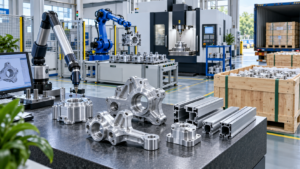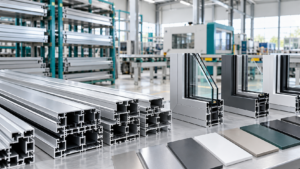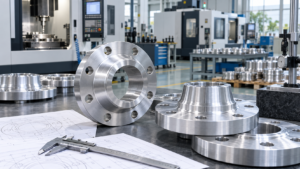
Baihaoli explains how alloy selection, forging control and precision machining help aluminum flanges perform in demanding equipment environments.
Power equipment projects increasingly require components that combine mechanical stability, corrosion resistance and lower structural weight. For buyers who work with outdoor equipment, new energy systems, ultra-high-voltage support structures and specialized assemblies, forged aluminum alloy flanges can offer a practical balance between strength and efficiency. Binzhou Beihaoli New Materials Co., Ltd. focuses on this application area by integrating forging, heat treatment, CNC machining and inspection into one manufacturing workflow.
A flange may look like a simple circular part, but its performance depends on a chain of controlled decisions. The process begins with understanding the working conditions. Buyers usually need to confirm connection type, pressure class, bolt-hole layout, sealing face, installation environment, expected load and quantity. Those details guide alloy selection. Common options such as 6061-T6, 6063-T5, 5052 and 5083 each bring different advantages for machinability, corrosion resistance, dimensional stability and forming behavior. Matching the alloy to the application is one of the most important steps before production begins.
Forging gives aluminum flanges a more reliable internal structure than parts made only by cutting from plate. Controlled deformation helps refine the metal structure and supports stronger mechanical properties in critical directions. After forging, heat treatment must be managed carefully so that the required temper and performance can be achieved. The goal is not simply to make a part that looks correct. It is to create a component that can maintain stable performance in the equipment where it will be installed.
Precision machining is the next major stage. Flange faces, inner diameters, outer diameters, bolt holes and grooves must be processed according to the drawing. CNC turning and drilling help keep repeatability across batches, especially when customers order multiple flange sizes or non-standard geometries. For equipment manufacturers, repeatability matters because a flange that requires rework during assembly can slow down an entire project. Baihaoli's machining workflow is designed to reduce that risk by checking dimensions during production rather than only at the final stage.
Surface quality also affects the buyer's experience. Aluminum alloy parts may be used in humid, coastal, outdoor or industrial environments, so surface treatment and finishing requirements should be discussed early. Some projects need a clean machined finish, while others may require anodizing, coating or special packaging to protect the parts during transportation. For export projects, packing is not a detail at the end of the process. It is part of the product plan, especially when precision-machined faces need protection.
Documentation is another area where professional buyers often need support. Mill test reports, quality certificates, inspection records and packaging information help purchasing teams, engineers and project managers confirm that the delivered components match the agreed specification. When a supplier understands documentation requirements from the beginning, communication becomes smoother and the risk of missing information is reduced.
For custom aluminum flanges, the most useful inquiry normally includes drawings, alloy grade, pressure class, surface finish, quantity, destination and delivery schedule. If drawings are not available, samples or detailed dimensions can support the first technical review. Baihaoli can then evaluate the production route, machining difficulty, inspection points and packaging plan before preparing a quotation.
As equipment manufacturers continue to seek lighter and corrosion-resistant solutions, forged aluminum alloy flanges will remain an important option for specialized projects. The key is to treat each flange as an engineered component rather than a generic part. With careful alloy matching, controlled forging, accurate machining and practical export support, aluminum flanges can help buyers build reliable equipment while improving weight and handling efficiency.
Another point for project buyers is lead-time planning. Aluminum flange projects can move quickly when the commercial and technical information arrives together, but delays often occur when drawings, alloy requirements or packing expectations are confirmed after quotation. A clear inquiry package helps the supplier reserve material, plan forging capacity and prepare machining programs earlier. It also gives the buyer a more realistic view of production time, inspection time and shipping preparation. For urgent equipment maintenance or project replacement work, this planning can make a practical difference.
Baihaoli also recommends discussing batch consistency before the first order is placed. If a customer expects repeat purchasing, the initial drawing, inspection record and packaging method should be treated as a long-term standard. Keeping these records stable makes later orders easier to repeat and helps engineering teams compare new batches with previous deliveries. In international supply chains, this type of discipline reduces unnecessary communication and helps both sides build a more predictable purchasing routine.
For many buyers, aluminum also supports easier handling during assembly. Lighter flanges can reduce lifting difficulty, simplify site movement and make replacement work more manageable, especially when the equipment is installed in outdoor or elevated positions. These practical advantages should be considered together with strength, corrosion resistance and machining accuracy.