From thermal break window systems to surface finishes, Baihaoli reviews the practical details behind modern architectural aluminum profile projects.
Architectural aluminum profiles play a central role in modern doors, windows, curtain walls, sunrooms, balustrades and building envelope systems. Buyers want profiles that are light, stable, easy to fabricate and suitable for attractive surface treatment. At the same time, energy-saving building requirements are pushing more projects toward thermal break systems and carefully designed profile structures. Binzhou Beihaoli New Materials Co., Ltd. supports these needs with aluminum profile manufacturing, customization and finishing options for construction customers.
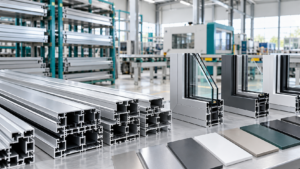
A successful profile project usually begins with the section drawing. The section determines not only the visual appearance of the frame but also its strength, assembly method, sealing route and compatibility with accessories. Wall thickness, cavity design, screw channel position, drainage path and glass groove structure all matter. When the profile is used in a thermal break system, the design must also consider the polyamide strip, commonly PA66 GF25, and the way the aluminum sections are connected after insertion.
Material choice is another practical decision. 6063-T5 and 6063-T6 are widely used in architectural profile systems because they offer a useful balance of extrusion performance, surface quality and mechanical properties. For some special requirements, alternative alloys may be discussed. The best choice depends on the application, required strength, finishing method and fabrication plan. Buyers who share the target use early can receive more accurate recommendations.
Energy performance depends on the complete system, not only on the profile itself. Thermal break aluminum profiles help reduce heat transfer through the frame, but final performance also relies on sealing strips, glass configuration, hardware, fabrication accuracy and installation quality. For this reason, Baihaoli encourages customers to describe the expected application, such as residential windows, commercial curtain walls, project doors or high wind-pressure areas. This information helps the team understand whether the requested section and wall thickness are suitable.
Surface treatment is where architectural profiles become part of the building's visual identity. Common options include anodizing, powder coating, PVDF coating and wood grain finishes. Each finish has its own appearance, durability and project use. Powder coating can provide a broad color range, anodizing highlights the metallic character of aluminum, PVDF is often selected for demanding exterior use, and wood grain can support decorative design requirements. Samples are useful when buyers need to confirm color, gloss and texture before batch production.
For fabricators and project contractors, consistency across batches is essential. Profiles need stable dimensions, smooth surfaces and packaging that protects long lengths during transportation. Scratches, deformation or mixed profiles can create delays during fabrication. Proper bundle protection, labeling and loading plans help reduce handling problems. This is especially important for export customers who receive goods after long-distance transport and need to move quickly into cutting, assembly and installation.
Customization can include more than one profile section. A complete window or curtain wall system may require frames, sashes, mullions, transoms, glazing beads, connectors and decorative covers. Industrial buyers may also request matching aluminum accessories or special lengths to reduce waste in fabrication. When these details are planned together, the order becomes easier to manage and the final system becomes more coherent.
For a faster quotation, buyers should provide drawings, alloy and temper requirements, wall thickness, length, finish, color standard, packing method, quantity and destination. If the project is still in design, a target application and reference sample can also be useful. Baihaoli can review the technical points and help customers move from section confirmation to production planning.
As building systems continue to demand better efficiency, cleaner appearance and dependable supply, architectural aluminum profiles remain a flexible solution. With correct design review, reliable extrusion, suitable finishing and careful packaging, profiles can support projects that need both engineering performance and visual quality. Baihaoli's role is to help buyers turn those requirements into practical, manufacturable aluminum profile systems.
Project coordination is especially important for architectural profile orders because many parties may be involved. Designers focus on appearance and performance, fabricators focus on cutting and assembly, contractors focus on installation, and purchasing teams focus on schedule and cost. When profile drawings, finish samples and packing requirements are confirmed early, each party can work with fewer surprises. Baihaoli's role is to help translate the design requirement into an extrusion and finishing plan that can be manufactured consistently.
For international buyers, it is also useful to consider how profiles will be identified after arrival. Long aluminum sections can look similar when bundled, so labels, bundle lists and logical packing groups help reduce mistakes during fabrication. If a project includes several profile types, separating them by system, length or installation area can save time at the workshop. These details may seem small, but they help the finished project move from container unloading to assembly with better efficiency.