Table of Contents
Furniture edge banding profiles should be selected around the complete assembly, with the controlling interfaces agreed before an order is released. The relevant product role is to protect and finish exposed furniture panel edges. For the buyer, the first decision is how the proposed component will meet that role in the actual equipment or installation. A nominal size or an attractive product image is useful context, but it does not resolve the fit, material and acceptance requirements.
This guide focuses on panel edge fit selection. The review needs to cover panel thickness range, profile opening, visible lip and end treatment. The practical risk is that a tight dry fit can become too tight after coating or panel swelling. Addressing that mechanism early makes quotations easier to compare and gives the sample review a clear purpose.
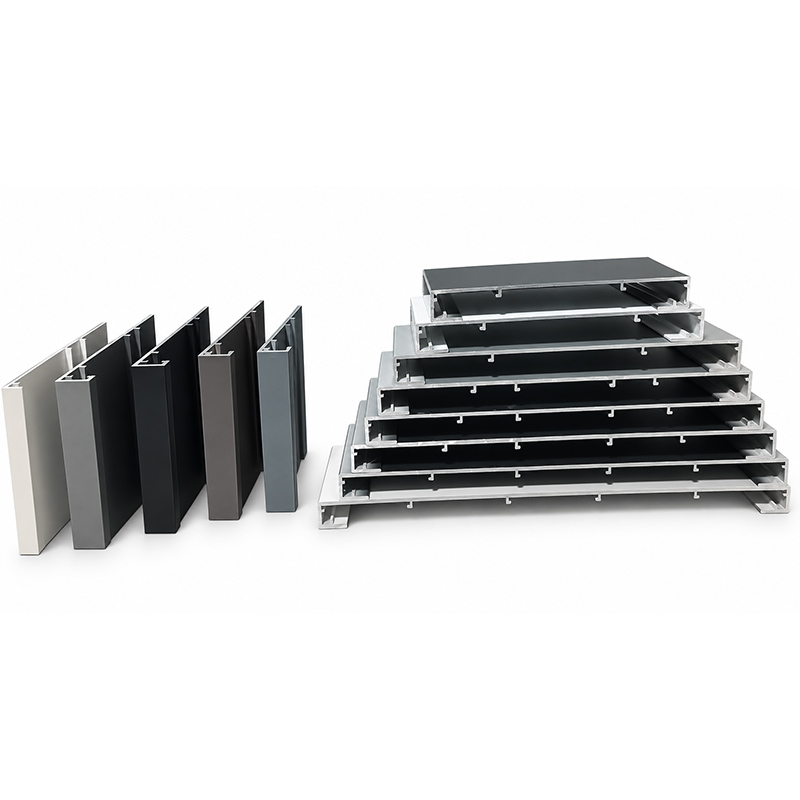
A review scenario for furniture edge banding profiles
Trial the profile on the thinnest and thickest permitted panels. Include a finished corner and an exposed cut end in the review sample.
For furniture edge banding profiles, turn the comparison into a written decision record. List the proposed configuration and the alternative, then compare panel thickness range, profile opening, visible lip and end treatment under the actual application conditions. Ask which requirements are already demonstrated and which still need a drawing review, a calculation or a sample trial. This keeps the choice tied to evidence rather than to a familiar product name.
Review the panel and supporting substrate
Furniture assemblies made with furniture edge banding profiles depend on the panel or cabinet substrate as well as the metal section. Record panel thickness limits, edge condition, moisture exposure and the selected fastening method. A screw that holds well in one board material may behave differently in another. Include the real substrate in the sample rather than testing the profile in isolation.
For furniture edge banding profiles, check the permitted range of panel sizes and any local reinforcement around attachments. Confirm edge protection and clearance for seasonal or service movement where applicable. Keep visible finish approval separate from load or retention checks. If a customer changes the infill material, revisit attachment and fit before treating the existing profile approval as transferable to the revised furniture design.
Inspect grooves with the real mating hardware
A groove in furniture edge banding profiles performs a specific job, such as retaining a gasket, panel, spline, fastener or connector. Width alone does not describe that job. Depth, lip shape, entry clearance and the surrounding wall all influence engagement. Identify the mating component and its tolerance on the drawing so the extrusion supplier can review the complete fit.
For furniture edge banding profiles, combine dimensional inspection with an agreed functional trial using production-representative hardware. A hand-selected fastener that happens to fit is weak evidence for a batch. Include finish allowance and the range of mating sizes. Where the joint transfers load, a fit check establishes assembly compatibility only; any required load or slip validation should follow the approved design and test plan.
Control drawing and process changes
A repeat order for furniture edge banding profiles should begin by confirming the current drawing and sample references. Small changes in hole position, coating, gasket or material condition can affect an established interface. Use a revision log that describes the changed features and identifies the approval authority. Avoid relying on a new file name or a message that says to use the latest version.
For furniture edge banding profiles, review work in progress when a change is released. Decide whether existing parts remain acceptable, require rework or must be segregated. Update inspection fixtures and packing labels along with the manufacturing drawing. A supplier can produce the new geometry correctly and still ship a mixed revision if inventory controls are overlooked. Keep the final agreement attached to the purchase order and batch release record.
Align delivery promises with the process route
A delivery plan for furniture edge banding profiles should include drawing approval, tooling if needed, material availability, samples, production, finishing, inspection and shipment preparation. Ask which stage starts only after buyer approval and which activities can proceed independently. A unit-price quotation without a defined approval sequence can hide a schedule assumption that becomes visible only when the order is urgent.
For furniture edge banding profiles, record required documents and witness points early, since missing approvals can hold an otherwise finished batch. Separate factory dispatch from arrival at the destination and identify the agreed shipping basis. Avoid presenting a general website lead time as a promise for a custom order. Obtain an order-specific schedule and review the effect of each technical change on the remaining steps.

Keep material and production lots traceable
Traceability for furniture edge banding profiles means that delivered parts can be linked to the agreed material and production records. Define the level required by the project, such as a heat, batch or individually identified part. Make the identification durable enough for manufacturing and receiving while respecting cosmetic or functional surfaces. A certificate without a reliable link to the shipment is difficult to use.
For furniture edge banding profiles, keep packing labels, inspection reports and material records consistent in part number and revision. If several lots are combined, preserve the distinctions rather than issuing an ambiguous summary. A traceability plan helps contain a later issue by identifying which pieces share the relevant process history. It should be established before production, when records can still be collected accurately.
Build an RFQ that makes quotations comparable
A useful RFQ for furniture edge banding profiles identifies the drawing revision, material, finish, order quantity, delivery condition and inspection requirements. Separate mandatory requirements from preferences that suppliers may propose alternatives for. Ask each bidder to list exclusions and deviations. Otherwise, a low price can reflect an unfinished part, omitted documentation or a different acceptance basis rather than a more efficient manufacturing route.
For furniture edge banding profiles, request separate explanations for tooling, samples, batch production and packaging where they materially affect the decision. State whether secondary processing and assembly components are included. Compare quotations against one controlled specification before comparing unit prices. Resolve conflicting assumptions in writing and place the agreed scope on the purchase order so it remains visible after commercial negotiations end.
Control cut length, squareness and end condition
Cut-to-length furniture edge banding profiles parts need an agreed datum, length tolerance and end condition. A correct length measured along one edge can hide an out-of-square cut that opens a visible corner or shifts a connector. Identify whether the finished length includes end machining or inserted components. The saw process and subsequent deburring should preserve the feature used to locate the assembly.
For furniture edge banding profiles, inspect representative pieces from the production setup and check the first assembled joint. Protect cut ends from dents during handling, especially where the end is visible or forms a sealing interface. If different lengths are packed together, use clear part labels. Re-cutting an incorrectly identified piece on site can remove a required hole, change an end detail or leave the finish edge unprotected.
Define the visible surface and user contact areas
Cosmetic priorities for furniture edge banding profiles should follow how the assembled product is seen and touched. Identify the primary sightline, exposed cut ends, corners and hand-contact surfaces. A small mark on a hidden face may be acceptable while the same mark on a handle or front edge is not. Document that distinction with an approved sample or clear drawing notes.
The review of furniture edge banding profiles should include edge comfort, burr removal and finish continuity at joints. Avoid replacing a measurable requirement with words such as premium or flawless. Agree viewing conditions and reasonable defect limits, then apply them consistently at production and receiving inspection. Protective film and packing should preserve the accepted surfaces without leaving residue or concealing damage until after assembly.
Evidence to compare for furniture edge banding profiles
| Decision | Incomplete basis | Evidence to request |
|---|---|---|
| Assembly interface | A nominal size or photograph | panel thickness range, profile opening, visible lip and end treatment |
| Material and finish | A generic material name | Specified alloy or grade, condition and finish route |
| Sample release | Appearance alone | panel thickness limits, finish sample and end-detail approval |
| Commercial comparison | Unit price without exclusions | Included processing, documents, packing and delivery basis |
The comparison is intended to guide a review of furniture edge banding profiles, not to supply a universal design value. Choose the acceptance basis from the actual project and keep it consistent across quotation, sample approval and receiving inspection. If the complete assembly needs performance validation, define that work separately from the supplier’s component measurements.
Request a review of furniture edge banding profiles
Beihaoli lists Furniture Edge Banding Profiles in its catalogue. Use that page to explain the product family, then send the current drawing and application requirements for a configuration-specific review. For furniture edge banding profiles, highlight panel thickness range, profile opening, visible lip and end treatment and include the evidence required for acceptance. Catalogue descriptions and photographs should not be treated as an order-specific capacity or certification statement.
The company’s manufacturing capabilities page describes forging, extrusion, machining, finishing and inspection support. Ask which operations and documents are included in the proposed furniture edge banding profiles supply route. Provide the required quantity, sample expectations and delivery destination so the response can address tooling, first-article work, packing and shipment planning on the same technical basis.
For independent background, consult the Aluminum Association processing overview. The process overview provides background. Product acceptance should follow the drawing, material requirements and agreed inspection plan.
Questions about furniture edge banding profiles
What information is needed to specify furniture edge banding profiles?
Provide the application, current drawing, material and supplied condition, dimensions, finish and quantity. For this interface, identify panel thickness range, profile opening, visible lip and end treatment. Include the mating parts so fit is reviewed as an assembly.
Can furniture edge banding profiles be selected by appearance alone?
No. A photograph helps explain the shape but cannot establish tolerances, material, service limits or system qualification. In this application, a tight dry fit can become too tight after coating or panel swelling. Request the relevant drawing and evidence.
Which evidence should accompany furniture edge banding profiles?
Agree an inspection package before ordering. Relevant inputs include panel thickness limits, finish sample and end-detail approval. Material records and assembly trials answer different questions, so neither should be used as a substitute for the other.
When should buyers request a sample of furniture edge banding profiles?
Request a sample before batch release when a new interface, finish, tool or material is involved. Define the checks in advance and retain the accepted sample identity and drawing revision.
What should a quotation for furniture edge banding profiles include?
Ask for the supplied condition, included processing and inspection, packaging, quantity basis and order-specific delivery plan. Have deviations and exclusions listed explicitly so competing offers can be compared on the same scope.